

Kereru Creek Food Forest - Before & After
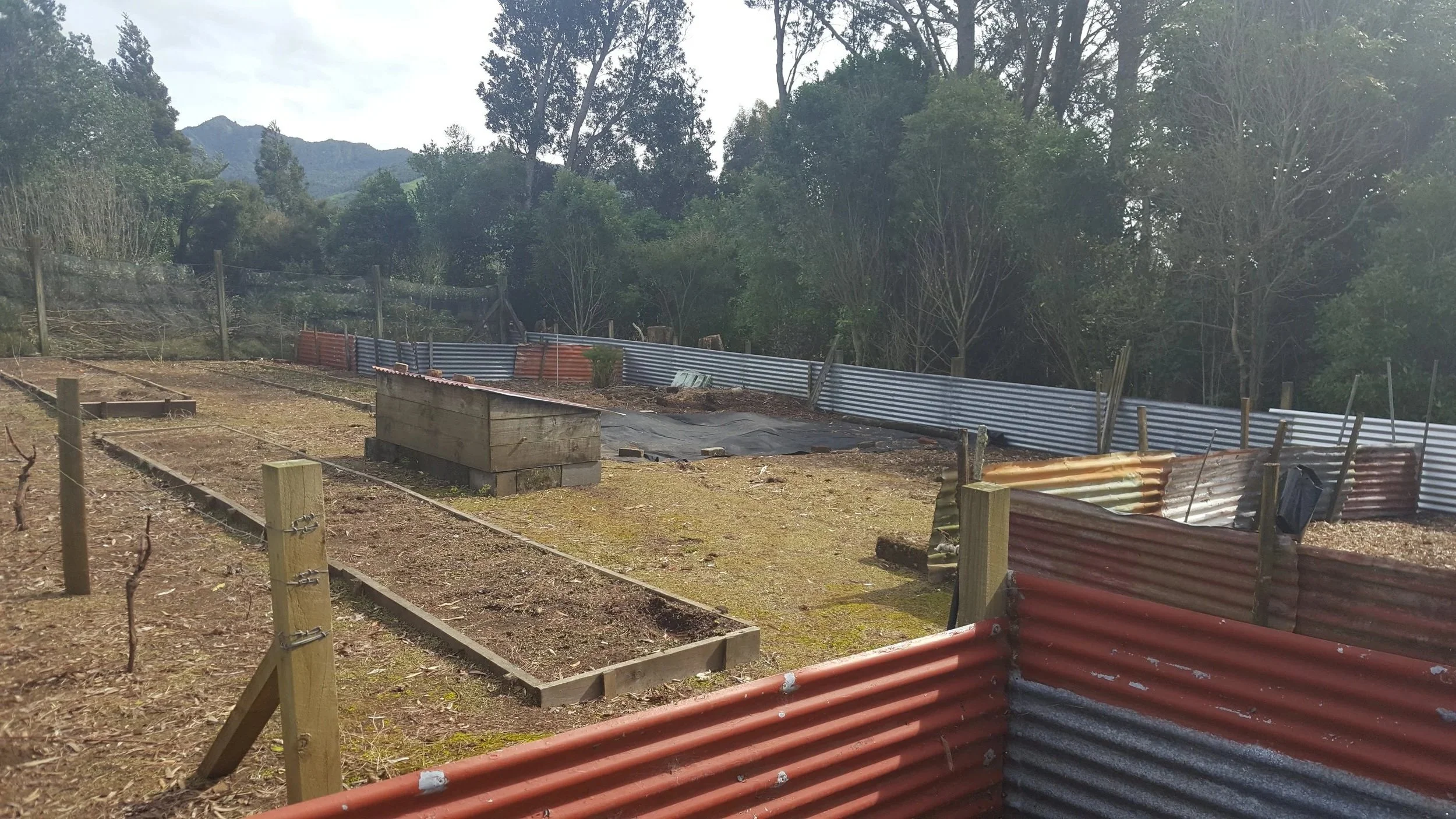
When we moved onto the property this area was extremely barren.
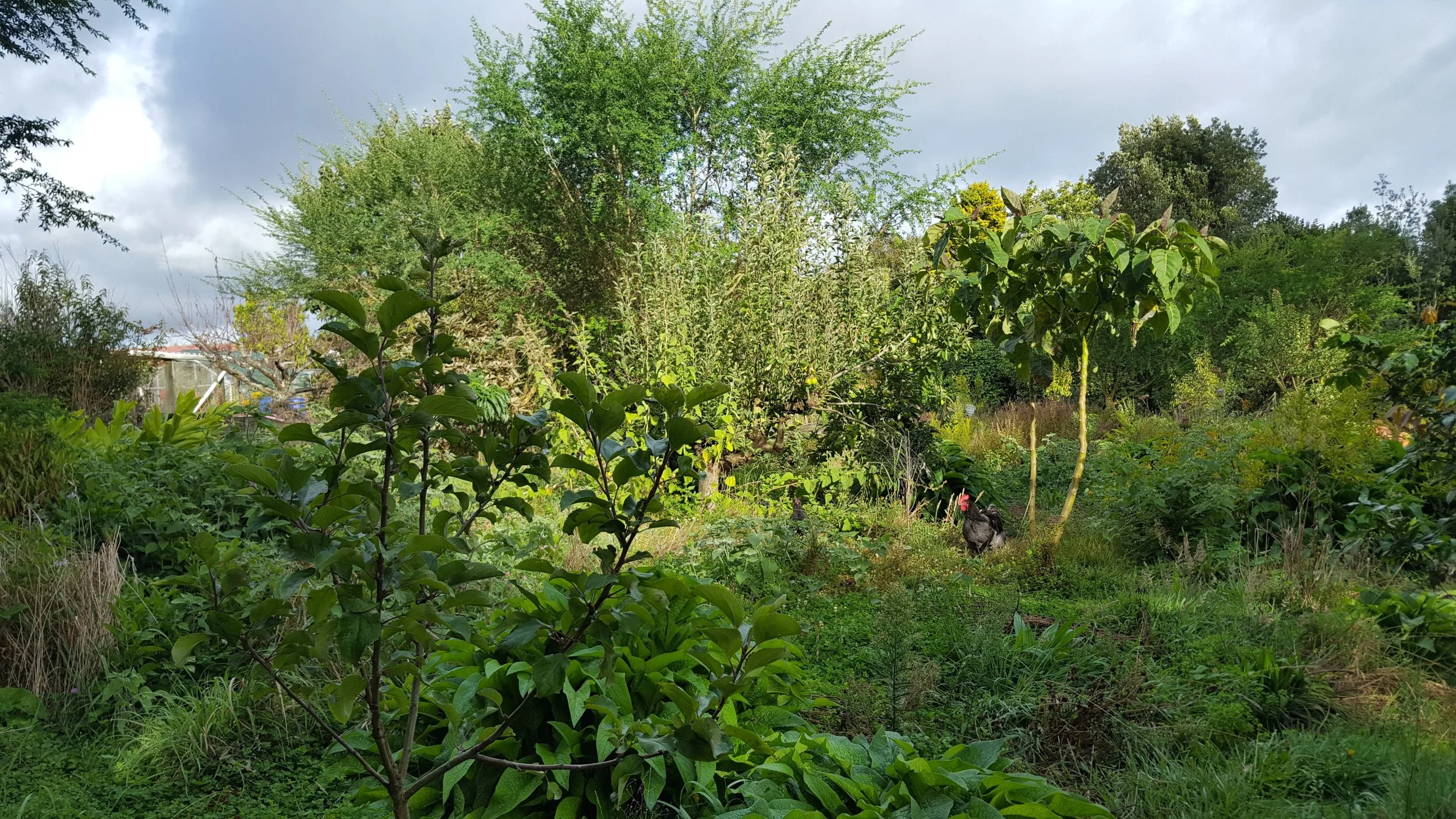
With design, mulching and planting the food forest grew and has become an oasis for wildlife, diversity and us.
What is a Food Forest?
A food forest, or forest garden, is a way of growing food and other plants in a way which mimics a natural forest. We design and plant the forest with species that we like, eat and use. These plants are layered or ‘stacked’ from the canopy trees down through the small trees, shrubs, ground cover, roots and vines. Plants for cycling nutrients, deterring pests and attracting beneficial insects are also designed into the system and many are multi-functionality. The spacing of trees is much wider than in a natural forest, so that light and warmth can get to the plants and trees that need it.
Food forests can be any size - acres or just a single tree in a small urban garden.
Once established, a food forest supports itself - providing its own fertility, growing its own soil. Food forests are fabulously resilient to weather extremes and become a whole self-supporting diverse eco-system.
Our Food Forest
Here at Kereru Creek we are on volcanic well-draining soils with an average annual rainfall of 1600mm. We have a temperate climate, with a few frosts during the winter months and mid 20s in the summer. We planted our main fruit trees in 2018 after a year of observation. We undertook our first attempt at a food forest by laying down carpet, cutting holes and planting straight into it.
After a few years, the trees were established but nothing much else was growing, so we began the huge task of ripping the carpet out and chopping and dropping anything that grew, to form layers of goodness on top of the soil. In the last year we have added pathways through the food forest for better access
The canopy layer include plums, pears, apples, peaches, apricot, fig, hazelnuts, walnut, custard apple, tamarillos and a vanilla bean tree. The understory are the smaller trees; orange, lemon, lime, mandarins and grapefruit. The shrub layer consists of blueberries, currents, rosemary, pineapple sage and globe artichoke. We have a herbaceous layer with numerous different herbs and ground cover plants. Everything we plant is either edible for us or for the bees and birds.